

Eustace Miles
English real tennis player, amateur world champion and 1908 Olympic silver medallist, later an author and restaurateur
The origins- Born
- September 22, 1868
- Died
- December 20, 1948
- Country
- United Kingdom
Biography
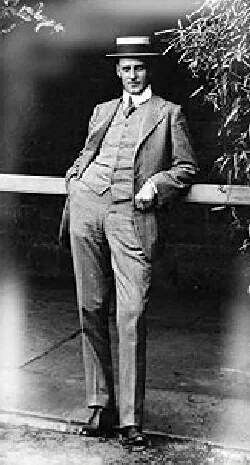
Eustace Miles (Hampstead, 22 September 1868 - London, 20 December 1948) was an English real tennis player who won major titles in the Edwardian era before becoming better known as an author and a businessman in the field of health food. His career sits at the meeting point of late Victorian amateur sport and the health culture that flourished in Britain at the time, which is why he still attracts interest beyond his results. His best-known sporting moment came at the 1908 London Olympics, where he won the silver medal in real tennis.
He was the grandson of Sir William Miles, 1st Baronet, and was educated at Eastbourne College, Marlborough College and King's College, Cambridge. In 1906 he married Dorothy Beatrice Harriet Killick, known as Hallie, who was also an author and shared many of his charitable interests. A significant part of his competitive development took place in America. From 1900 to 1902 he lived there and coached Jay Gould II, a much younger player. In 1900 he became the first non-American to win the United States Championship, and that same year he was also the amateur squash racquets champion of America.
His record in his main sport is impressive. He was English amateur real tennis champion in 1898, 1899, 1900, 1901, 1902, 1903, 1905, 1906, 1909 and 1911, and world amateur champion from 1898 to 1903 and again in 1905. In racquets, a close relative of the game, he took the world singles title in 1906 and the doubles title in 1902, 1904, 1905 and 1906. At the 1908 Games, aged 39, he lost the final to Gould, while the bronze went to fellow Briton Neville Bulwer-Lytton, later 3rd Earl of Lytton.
Off court he became a public figure through his views on diet and exercise. He wrote many books, some in collaboration with his lifelong friend E. F. Benson, covering health, athletics, diet, ancient history and the classics. His regimen combined abstaining from alcohol with games, daily gymnastics, personal cleanliness, breathing exercises and meditation, and he promoted what he called mental hygiene. Although he is usually linked to vegetarianism, he disliked the label and criticised ordinary vegetarian diets for their lack of protein. He edited a monthly magazine, Healthward Ho!, and marketed his own products, including Emprote, a protein-rich food named after his initials. His vegetarian restaurant in Chandos Street, near Charing Cross, drew many diners and is mentioned in a 1914 London dining guide and in E. M. Forster's novel Howards End.
His business later ran into difficulties. Although his restaurants prospered during the First World War, interest in vegetarianism declined during those years, and Miles eventually went bankrupt and sold his properties. He died in 1948 leaving very little money. Today he is remembered chiefly as an unusual figure of British physical culture, whose influence some historians have noted, rather than as one of the great champions of his era.
Main achievements
- Olympic silver medal, London (1908)
- United States Championship winner (1900), the first non-American to win it
- English amateur real tennis champion (1898-1903, 1905, 1906, 1909 and 1911)
- World amateur real tennis champion (1898-1903 and 1905)
- World singles champion in racquets (1906)
- World doubles champion in racquets (1902, 1904, 1905 and 1906)
- American amateur squash racquets champion (1900)
Trivia
A chop in the semi-final
In 1904 the satirical magazine Punch humorously reported that, during a tennis semi-final, Miles was surrounded by an angry crowd that forced him to eat a meat chop.
Skipping lunch instead
Miles tried Edward H. Dewey's No Breakfast Plan but dropped it in favour of his own No Lunch Plan.
Players of the same era
 Edwin FlackAustralia 1873–1935
 John Pius BolandUnited Kingdom 1870–1958
 Lottie DodUnited Kingdom 1871–1960Dimitrios Kasdaglis1872–1931Dimitrios KasdaglisGreece 1872–1931
 Reginald DohertyUnited Kingdom 1872–1910
 Momčilo TapavicaHungary 1872–1949
 William RenshawUnited Kingdom 1861–1904
 Hedwig RosenbaumBohemia 1864–1939George S. Robertson1872–1967George S. RobertsonUnited Kingdom of Great Britain and Ireland 1872–1967
 Arthur GoreUnited Kingdom 1868–1928
 Blanche BingleyUnited Kingdom 1863–1946
 Ernest RenshawUnited Kingdom 1861–1899