World number ones: the ATP and WTA rankings through history
The top spot in the men's and women's rankings is probably the most visible reference in professional tennis. Both systems are based on merit: the number one is the player who has accumulated the most points on tour over the previous 52 weeks. The ATP has used a computerised system since 23 August 1973, and since 1979 it has published an updated list every week. The WTA has done so since 3 November 1975.
The way points are counted has changed several times. Today the men's ranking adds up a player's best eighteen tournaments, with restrictions by category. Those counting events include the four Grand Slams, the eight mandatory Masters tournaments, the non-mandatory Masters 1000 event in Monte-Carlo, the best four ATP 500 events and the best two ATP 250 events. Players who qualify for the year-end ATP Finals add those points too, which can bring the total to nineteen tournaments. Between 1990 and 1999 the system counted a player's best fourteen results; from 2000 to 2008 it used the best eighteen; and from 2009 the ATP kept that approach but adopted a new point scale. A two-year window was used between August 2020 and August 2021 because of the pandemic, and the standard 52-week period returned afterwards. In 2024 tour-level point values were raised again.
In terms of weeks, the headline figure belongs to Novak Djokovic, with a record 428 weeks at world number one. Roger Federer holds the record for consecutive weeks at the top, 237. Djokovic also has the most year-end number one finishes, eight, including the two seasons affected by the pandemic. Pete Sampras finished six consecutive years at number one, and John McEnroe held the top spot a record fourteen times. Sampras and Djokovic are the only other players to have held it ten or more times, with eleven and ten stints respectively.
Age and longevity at the top offer a different set of records. Carlos Alcaraz is both the youngest world number one and the youngest to finish a year there. Djokovic holds the opposite marks: he is the oldest world number one and the oldest year-end number one. Federer has the longest gap between his first and most recent spells at the top, from 2 February 2004 to 24 June 2018. Rafael Nadal is the only player to have held the top ranking in three different decades: the 2000s, the 2010s and the 2020s. Djokovic has the longest span between his first and last year-end number one finish, from 2011 to 2023.
A wire-to-wire season, in which one player holds the top spot for the whole year, has happened thirteen times since 1973. Jimmy Connors managed it in 1975, 1976 and 1978, Ivan Lendl in 1986 and 1987, Pete Sampras in 1994 and 1997, Lleyton Hewitt in 2002, Federer in 2005, 2006 and 2007, and Djokovic in 2015 and 2021. Connors and Federer are the only players to have done it in three years, although Connors's years were not consecutive. At the other extreme, 1999 saw five different players at number one, the most in any single year: Sampras, Carlos Moyá, Yevgeny Kafelnikov, Andre Agassi and Patrick Rafter.
On the women's side, thirty players have been ranked number one in singles since 1975, and sixteen of them have finished a season in the top spot. Elena Rybakina is the current WTA singles number one. The records for weeks, consecutive weeks and year-end finishes follow a similar logic to the men's list, but fewer players have reached the summit, which makes individual marks easier to compare across eras.
Comparing decades shows a clear shift. In the 1970s and 1980s the top spot changed hands rarely, while in the 2000s and 2010s it was spread across more players and shorter spells, apart from the dominant figures of each period. Recent data still concentrate many weeks in Djokovic, Federer and Nadal, yet the number of players reaching the top keeps growing. These figures should be read with some care: the way points are counted, the pandemic seasons and the changes to the point scale all shape the context of each record.
Trivia
Number one without a Grand Slam
Ivan Lendl reached the top on 21 February 1983, but did not win his first Grand Slam until the 1984 French Open. Marcelo Ríos reached number one on 30 March 1998 without ever winning a Grand Slam title.
The year with the most number ones
In 1999 five players held the top spot, the highest number for any single year. It was also the only season in which three players made their debut at number one.
The shortest stay
Patrick Rafter spent just one week as world number one, the shortest spell in ATP history.
Players in this article
 Novak DjokovicSerbia 1987
 Roger FedererSwitzerland 1981
 Pete SamprasUnited States 1971
 John McEnroeUnited States 1959
 Carlos AlcarazSpain 2003
 Rafael NadalSpain 1986
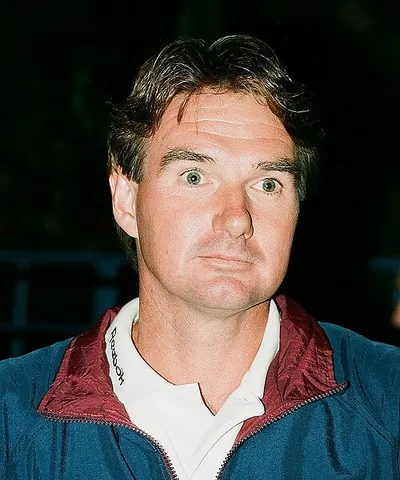 Jimmy ConnorsUnited States 1952
 Ivan LendlUnited States 1960
 Lleyton Hewitt 1981
 Carlos MoyáSpain 1976
 Yevgeny KafelnikovRussia 1974
 Andre AgassiUnited States 1970
 Patrick Rafter 1972
 Elena RybakinaKazakhstan 1999