

Bob Hewitt
former tennis player from Australia, naturalised South African, doubles specialist and Grand Slam champion in men's and mixed doubles
The Open Era beginsBiography
Robert Anthony John Hewitt, known as Bob Hewitt, was born on 12 January 1940 in Dubbo, a town in inland New South Wales about 400 kilometres west of Sydney. He was one of the leading doubles specialists of his era and completed the Grand Slam in both men's and mixed doubles. His name is also remembered today for the criminal conviction he received in 2015, an event that has reshaped how his sporting career is judged.
Hewitt grew up in Australia, where he was born and raised. In 1967 he married the South African Dalaille Nicholas and, as a result, became a South African citizen. During the 1970s he settled with his wife in Johannesburg, the city where he spent most of his adult life.
Hewitt's career is best understood through his doubles results, which were his main field. His highest singles ranking was world No. 34, reached in December 1975. In doubles he reached world No. 1 in March 1976. Title counts vary depending on the record consulted: in the Open Era he is credited with 6 ATP singles titles and 54 doubles titles, although other references put the totals at seven singles and 65 doubles. His Grand Slam haul comes to 15 titles, nine in men's doubles and six in mixed doubles. Among the mixed titles is the French Open of 1970, which he won alongside Billie Jean King, one of the most important figures in women's tennis and his partner at that event.
In 1967, the journalist Lance Tingay of The Daily Telegraph placed him sixth in the world, a ranking made by a reporter rather than an official body. Another landmark was the Davis Cup of 1974, which South Africa won as the only title in the competition's history for the country. The final was played without India, which boycotted the tie on the orders of its government in protest against apartheid and its effect on the country's community of Indian origin. The victory is remembered for that controversy, and Hewitt was an important part of the squad.
Doubles demands coordination with a partner, reading the play at the net and tactical understanding, and the fact that he won titles at all four majors in both disciplines suggests he adapted well to different courts and partners. Hewitt was inducted into the International Tennis Hall of Fame in 1992.
In 2011, The Boston Globe published a six-month investigation after a former student alleged that she had suffered abuse and harassment from the age of ten. Other people came forward with similar accounts. In 2012 his plaque was removed from the Hall of Fame, and he was formally expelled in April 2016. In 2014 he was charged with raping two underage students in the 1980s and 1990s. On 23 March 2015 the South Gauteng High Court found him guilty of two counts of rape and one of sexual assault of minors, and in May 2015 he was sentenced to an effective six years in prison. The judge refused the clemency requested by the defence, pointing to Hewitt's lack of remorse and stating that such crimes cannot be forgiven, while also taking his declining health and advanced age into account. He was also ordered to pay a fine of US$8,500 to support campaigns against sexual abuse.
Hewitt was released on parole in April 2020, after serving three years, six months and 22 days of his sentence. His legacy is now divided between his achievements in doubles, which place him among the leading specialists of his time, and the sexual offences conviction, which led to his exclusion from the Hall of Fame and which now shapes much of the public memory of his career.
Career timeline: titles, finals and medals
27 titles · 14 lost finals
- 1961
- 1962
- 1963
- 1964
- 1965Runner-up French Open (Roland Garros)Men's doubles · vs Roy Emerson / Fred Stolle · 6–8, 6–3, 8–6, 6–2
- 1967
- 1968
- 1970Champion French Open (Roland Garros)Mixed doubles · vs Françoise Dürr / Jean-Claude Barclay · 3–6, 6–4, 6–2
- 1972Champion French Open (Roland Garros)Men's doubles · vs Patricio Cornejo / Jaime Fillol · 6–3, 8–6, 3–6, 6–1
- 1975
- 1976
- 1977
- 1978
- 1979
Main achievements
- 1967: ranked sixth in the world by journalist Lance Tingay (unofficial)
- 1970: French Open mixed doubles champion with Billie Jean King
- 1974: Davis Cup champion with South Africa, final played without India
- 1976: world No. 1 in doubles (March)
- Best singles ranking: No. 34 (December 1975)
- Nine Grand Slam men's doubles titles
- Six Grand Slam mixed doubles titles
- Career Grand Slam in men's and mixed doubles
- 54 ATP doubles titles (in the most cited count)
- Inducted into the International Tennis Hall of Fame in 1992
Trivia
A boycott that shaped the final
India did not play the 1974 Davis Cup final against South Africa, on the orders of its government and in protest against apartheid. South Africa's victory is therefore tied to that controversy.
A press ranking in 1967
In 1967 the journalist Lance Tingay of The Daily Telegraph placed him sixth in the world. It was a press assessment rather than an official ranking.
Players of the same era
 Billie Jean KingUnited States 1943
 Arthur AsheUnited States 1943–1993
 Margaret CourtAustralia 1942
 Rod LaverAustralia 1938
 Ilie NăstaseRomania 1946
 Evonne Goolagong CawleyAustralia 1951
 John NewcombeAustralia 1944
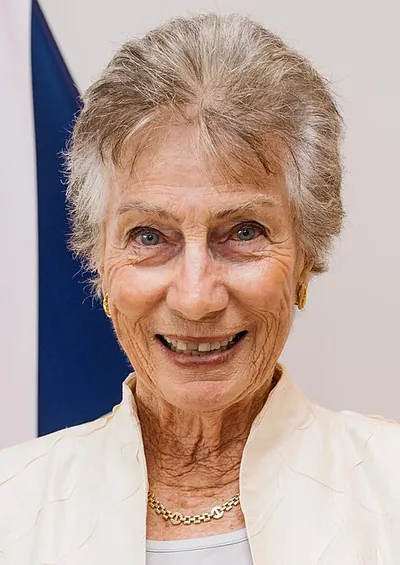 Virginia WadeUnited Kingdom 1945
 Roy EmersonAustralia 1936
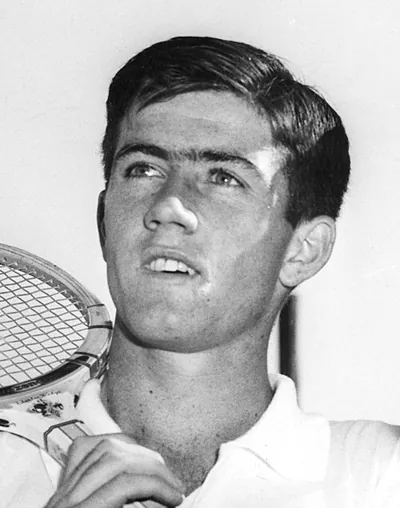 Ken RosewallAustralia 1934
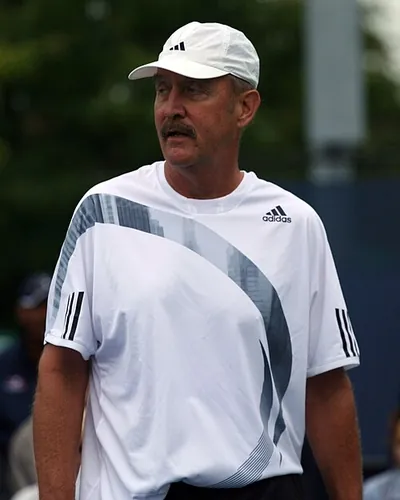 Stan SmithUnited States 1946
 Jan KodešCzech Republic 1946