

Jan Kodeš
Czech former tennis player, two-time French Open champion and 1973 Wimbledon champion
The Open Era begins- Born
- March 1, 1946
- Country
- Czech Republic
- Plays
- right-handed
- Height
- 175 cm
- Professional career
- 1968–1983
- Official profiles
- ATP · ITF
Biography
Jan Kodeš is a former Czech professional tennis player, born in Prague, who was among the leading players of the early 1970s. His professional career extended until 1983. He is best remembered for his clay-court results at the French Open, where he won twice, and for his Wimbledon title of 1973. His peak years coincided with the first seasons of the Open Era, which makes his career a useful lens on the shift from amateur to professional tennis and the disputes that came with it.
Kodeš grew up in a country under communist rule, where athletes faced tight limits on travel abroad. He trained in Prague, and early on he showed promise at Roland Garros, reaching the fourth round in both 1967 and 1969. Before he established himself on the professional circuit he won his first tournament in St Petersburg in the United States, beating Joaquin Loyo Mayo in the final. He later graduated in economics from Prague University.
Of medium height and solidly built, Kodeš was a baseliner who moved best on slow surfaces. His greatest asset was his determination and physical stamina. He often won matches in which he looked exhausted, fighting for every point to the end. He could sustain long rallies from the back of the court, and although clay was his best surface, he also won titles on faster courts.
In 1970 he arrived at Roland Garros as the seventh seed. In the quarter-finals he came back from two sets to one down to win a five-set match, and in the final he beat Željko Franulović in straight sets, 6-2, 6-4, 6-0. In 1971 he defended the title, defeating Ilie Năstase 8-6, 6-2, 2-6, 7-5 in a closer final against a Romanian whose talent and temperament made him one of the game's most debated figures.
That same year he played the US Open, which was then contested on grass. In the first round he knocked out the top seed, the Australian John Newcombe, and in the semi-finals he beat the American Arthur Ashe in five sets. In the final, though, he lost in four sets to Stan Smith. The result underlined that his game was far more effective on clay than on the faster surfaces.
His Wimbledon title of 1973 came in unusual circumstances. Many of the leading players stayed away in protest at the suspension of the Croatian Nikola Pilić, who had been banned by his federation for refusing to play a Davis Cup tie. It was the first collective boycott by players in the history of professional tennis, and the event was heavily shaped by those absences. Seeded second, Kodeš beat the British player Roger Taylor in five sets in the semi-finals and then took the final in straight sets against Alex Metreveli.
Later that year he reached the US Open final again. After beating Pilić in the quarter-finals and Stan Smith in the semi-finals, he lost the final to John Newcombe in five sets, having led by two sets to one. In September 1973 he reached No. 5 in the world rankings, the highest position of his career.
His results at the majors declined in 1974, when he lost in the fourth round of the French Open and in the Wimbledon quarter-finals to Jimmy Connors. In 1975 he failed to reach the quarter-finals of any Grand Slam, the first time that had happened since 1969, though he did win the Madrid tournament over Adriano Panatta. In 1976 he won the indoor event in Switzerland and reached the US Open quarter-finals, where Connors beat him in straight sets. In 1977 he was runner-up in the doubles at Roland Garros with Wojciech Fibak, and the pair soon afterwards won the Barcelona tournament together.
In the Davis Cup he was a central figure for his country. He played 39 ties over 15 years and was one of the twenty players with the most matches played and won in the competition's history. In 1975 he led the team to the final in Stockholm, which it lost to Sweden after Björn Borg won the decisive rubber. Five years later he partnered Ivan Lendl in doubles in the final that gave Czechoslovakia the trophy.
Kodeš retired in 1983, after his last doubles finals at Hilversum alongside Tomas Smid. Afterwards he captained the Czechoslovak Davis Cup team from 1982 to 1987, served as president of the Czech Tennis Association from 1994 to 1998, and worked for the ATP in Czechoslovakia in 1987 and 1988. He received the ITF Award in 1988, was inducted into the International Tennis Hall of Fame in 1990, and in 2013 was given the Czech Fair Play Award by the Czech Olympic Committee. His legacy rests on consistency, on his clay-court achievements, and on his place in the history of Czech tennis.
Career timeline: titles, finals and medals
6 titles · 10 lost finals
- 1970
- 1971
- 1972
- 1973
- 1975
- 1977
- Runner-up French Open (Roland Garros)Men's doubles · vs Brian Gottfried / Raúl Ramírez · 7–6, 4–6, 6–3, 6–4
- 1978
Main achievements
- French Open singles champion: 1970 and 1971
- Wimbledon singles champion: 1973
- US Open singles runner-up: 1971 and 1973
- Nine top-level singles titles and 17 doubles titles in the Open Era
- World No. 5 in September 1973
- Davis Cup winner with Czechoslovakia: 1980
- Davis Cup finalist with Czechoslovakia: 1975
- Inducted into the International Tennis Hall of Fame: 1990
Trivia
A Wimbledon shaped by a boycott
His 1973 victory came at a tournament missing many of the leading players, who were protesting the suspension of Nikola Pilić. It was the first collective player boycott of its kind in professional tennis.
Davis Cup longevity
He played 39 ties across 15 years and ranks among the twenty players with the most matches played and won in the competition's history.
A final settled by Borg
In the 1975 Davis Cup final in Stockholm, Björn Borg won the decisive rubber against Kodeš, giving Sweden the tie.
Players of the same era
 Billie Jean KingUnited States 1943
 Arthur AsheUnited States 1943–1993
 Margaret CourtAustralia 1942
 Rod LaverAustralia 1938
 Ilie NăstaseRomania 1946
 Evonne Goolagong CawleyAustralia 1951
 John NewcombeAustralia 1944
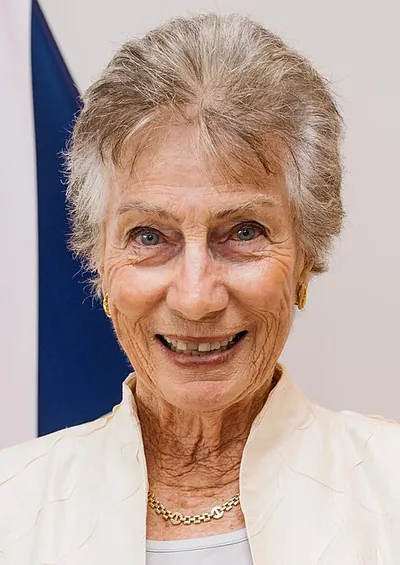 Virginia WadeUnited Kingdom 1945
 Roy EmersonAustralia 1936
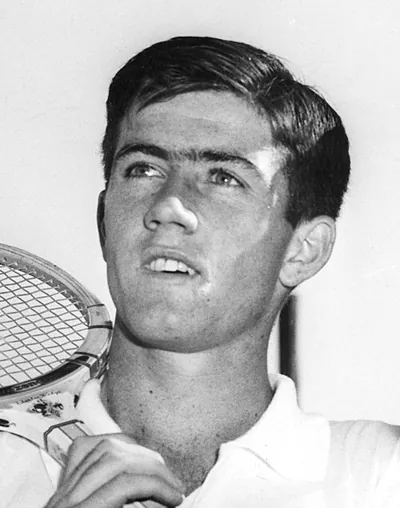 Ken RosewallAustralia 1934
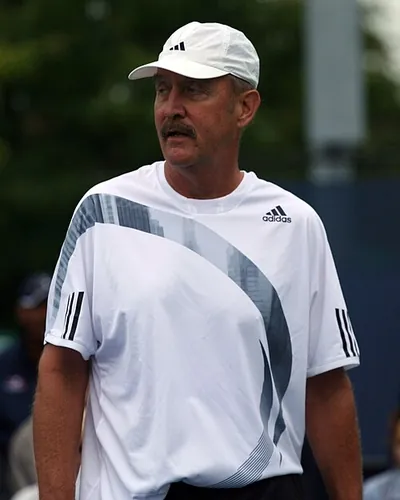 Stan SmithUnited States 1946
 Vitas GerulaitisUnited States 1954–1994