Olga Morozova
Russian former tennis player who competed for the Soviet Union, 1974 French Open and Wimbledon singles runner-up and French Open doubles champion, later a coach
The Open Era beginsBiography
Olga Morozova, born in Moscow on 22 February 1949, was one of the most prominent Soviet tennis players of the Cold War era. She became the first player from the USSR to reach the top level of the international game, and the first from her country to win a Grand Slam title, which came in doubles. Her playing career, combined with a long career as a coach, has earned her the nickname “Godmother of Russian tennis”, and her name remains essential for understanding how Soviet tennis gradually entered the international circuit.
She began playing at the age of ten under Nina Teplyakova, who remained her coach for the whole of her career. She trained in Moscow and later graduated in physical education from the city’s university, an unusual background for a player of her generation. Her rapid progress meant that, at only sixteen, she was invited to represent the Soviet Union in the girls’ event at Wimbledon. That trip was her first time abroad and her first experience of grass courts, and she won the 1965 Wimbledon junior singles title, an early sign of what was to come.
Her senior career started quickly. In 1968 she and fellow Soviet Alex Metreveli reached the mixed doubles final at Wimbledon, where they lost to Margaret Court and Ken Fletcher. That result made them the first Soviet players to reach a Grand Slam final. Two years later, in 1970, she reached the mixed doubles final at Wimbledon again, losing this time to Ilie Nastase and Rosemary Casals. In 1972 she reached the final of the Italian Open, the first singles final in a significant tournament reached by a Soviet player, male or female.
The 1972 season also brought several runner-up finishes at smaller events, several of them against Evonne Goolagong, with whom she built a steady rivalry during those years. These defeats did not hide a season in which she showed she could compete with the best players on different surfaces. In 1973 she also came close to titles in other tournaments, partly because of the growing dominance of Chris Evert, the leading figure in the women’s game of the time.
The summer of 1974 was the high point of her career. She reached the finals at both the French Open and Wimbledon, and on each occasion lost to Evert, whom she never beat in singles. At Wimbledon she had knocked out defending champion Billie Jean King in straight sets in the quarterfinals, and in the semifinals she recovered from a set down against Virginia Wade to win 6–4 in the third. Her ranking rose to world No. 3 going into the US Open, the highest position of her career. That same year, partnering Evert, she won the French Open doubles title, the first Grand Slam won by a Soviet player, an achievement that had a major impact back home and offset the singles disappointments.
In 1975 and 1976 she reached more Grand Slam doubles finals without winning the title. In 1975 she was runner-up at the Australian Open with Margaret Court and at the French Open with Julie Anthony; in 1976 she lost the US Open doubles final with Virginia Wade. According to the WTA, her career record includes eight singles titles and sixteen doubles titles, though other counts give nine and eighteen. It is worth bearing in mind this discrepancy when checking older statistics, since the counting criteria of the period do not always match current ones.
Little detail is documented about her playing style, so it is not possible to be certain about her signature shots or her preferred surface. What is well documented is her ability to recover from difficult positions in matches and her competitiveness in both singles and doubles at the highest level, a versatility that was not common on the women’s tour at the time.
Her playing career ended in 1977. The Soviet Union had a policy that barred its athletes from competing against South Africans, against the background of international pressure over apartheid, and Morozova stepped away from the professional tour in disagreement with that rule. She nonetheless returned to play for the Soviet side in the Federation Cup between 1978 and 1980. In 1978 and again in 1979 she led the team to the semifinals of the competition, a result no Soviet side had achieved before.
After retiring she began a long career in coaching. During the 1980s she was head coach of the Soviet women’s squad, and in 1988 the team reached its first Federation Cup final, where it lost to Czechoslovakia. She also helped pioneer the creation of the Kremlin Cup. In the early 1990s the British Lawn Tennis Association hired her as head of girls’ tennis, based at the national performance centre at Bisham Abbey, and for much of the 1990s she was a familiar figure in British tennis. Andy Murray has said that she coached him when he was around twelve or thirteen years old.
From 2003 she worked individually with leading players, among them Elena Dementieva, Svetlana Kuznetsova, Laura Robson, the more recent Harriet Dart and the Ukrainian Sergiy Stakhovsky. She is widely regarded as one of the few women coaches to have worked at the very highest level of the tour, which was uncommon in her era. In 1998 she received the Sarah Palfrey Danzig Trophy, which recognises character, sportsmanship and contribution to the growth of the game, and in 2000 the Russian Tennis Federation named her Russian Tennis Player of the Twentieth Century.
Her personal life is also linked to tennis: she is married to Viktor Roubanov, Moscow singles champion in 1971, who was one of the first coaches of Anna Kournikova. In interviews Morozova has contrasted the British emphasis on taking part with the Russian tradition, in which winning still matters most. Her legacy combines historic results on court with a coaching career that has shaped several generations of players.
Career timeline: titles, finals and medals
5 titles · 8 lost finals
- 1968
- 1970
- 1972Champion Italian Open (Rome)Women's doubles · vs Gail Sherriff Chanfreau / Rosalba Vido · 6–3, 6–4
- 1973Champion Italian Open (Rome)Women's doubles · vs Martina Navratilova / Renáta Tomanová · 3–6, 6–2, 7–5
- 1974Champion French Open (Roland Garros)Women's doubles · vs Gail Chanfreau / Katja Ebbinghaus · 6–4, 2–6, 6–1
- 1975
- Runner-up French Open (Roland Garros)Women's doubles · vs Chris Evert / Martina Navratilova · 6–3, 6–2
- 1976
Main achievements
- 1965: Wimbledon junior girls’ singles champion.
- 1968: Wimbledon mixed doubles finalist with Alex Metreveli, losing to Margaret Court and Ken Fletcher.
- 1970: Wimbledon mixed doubles finalist, losing to Ilie Nastase and Rosemary Casals.
- 1972: Italian Open singles finalist, the first Soviet player to reach that stage.
- 1974: French Open singles runner-up to Chris Evert.
- 1974: Wimbledon singles runner-up to Chris Evert.
- 1974: French Open doubles champion with Chris Evert, the first Grand Slam won by a Soviet player.
- 1974: world No. 3, her career-high ranking.
- 1975: Australian Open doubles runner-up with Margaret Court.
- 1975: French Open doubles runner-up with Julie Anthony.
- 1976: US Open doubles runner-up with Virginia Wade.
- 1998: Sarah Palfrey Danzig Trophy.
- 2000: Russian Tennis Player of the Twentieth Century, awarded by the Russian Tennis Federation.
Trivia
A junior title at Wimbledon
Her first major trip abroad also brought her first experience of grass: in 1965, aged sixteen, she won the Wimbledon junior girls’ singles title.
A coach of Andy Murray
Andy Murray has said that Morozova coached him when he was around twelve or thirteen, an early period of his development that is not widely documented.
The godmother of Russian tennis
Her nickname, “Godmother of Russian tennis”, sums up both her pioneering playing career and her long role in training several generations of Russian players.
Players of the same era
 Billie Jean KingUnited States 1943
 Arthur AsheUnited States 1943–1993
 Margaret CourtAustralia 1942
 Rod LaverAustralia 1938
 Ilie NăstaseRomania 1946
 Evonne Goolagong CawleyAustralia 1951
 John NewcombeAustralia 1944
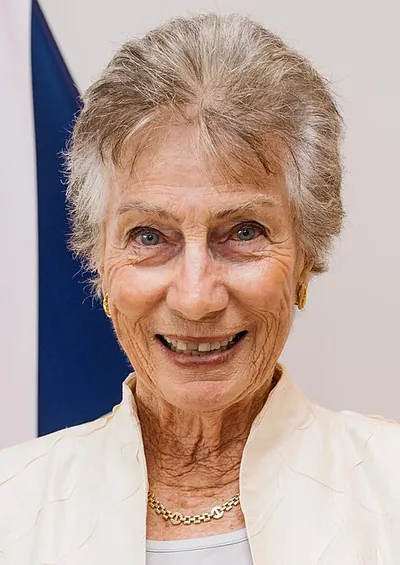 Virginia WadeUnited Kingdom 1945
 Roy EmersonAustralia 1936
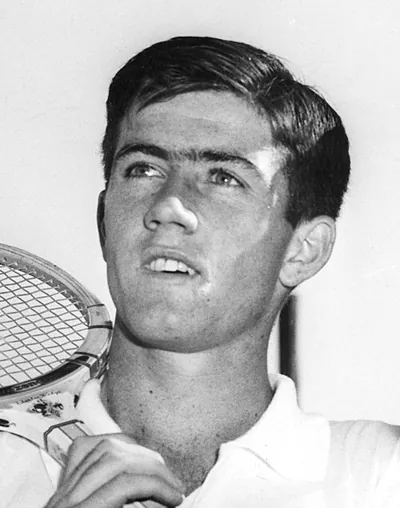 Ken RosewallAustralia 1934
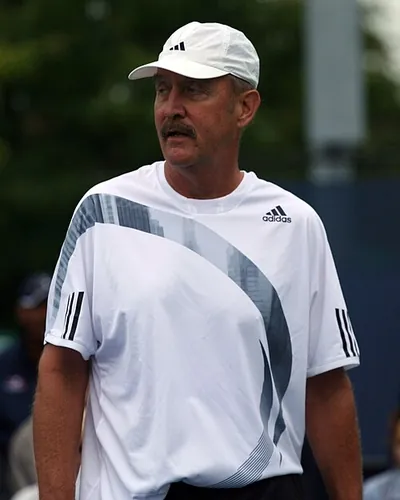 Stan SmithUnited States 1946
 Jan KodešCzech Republic 1946